
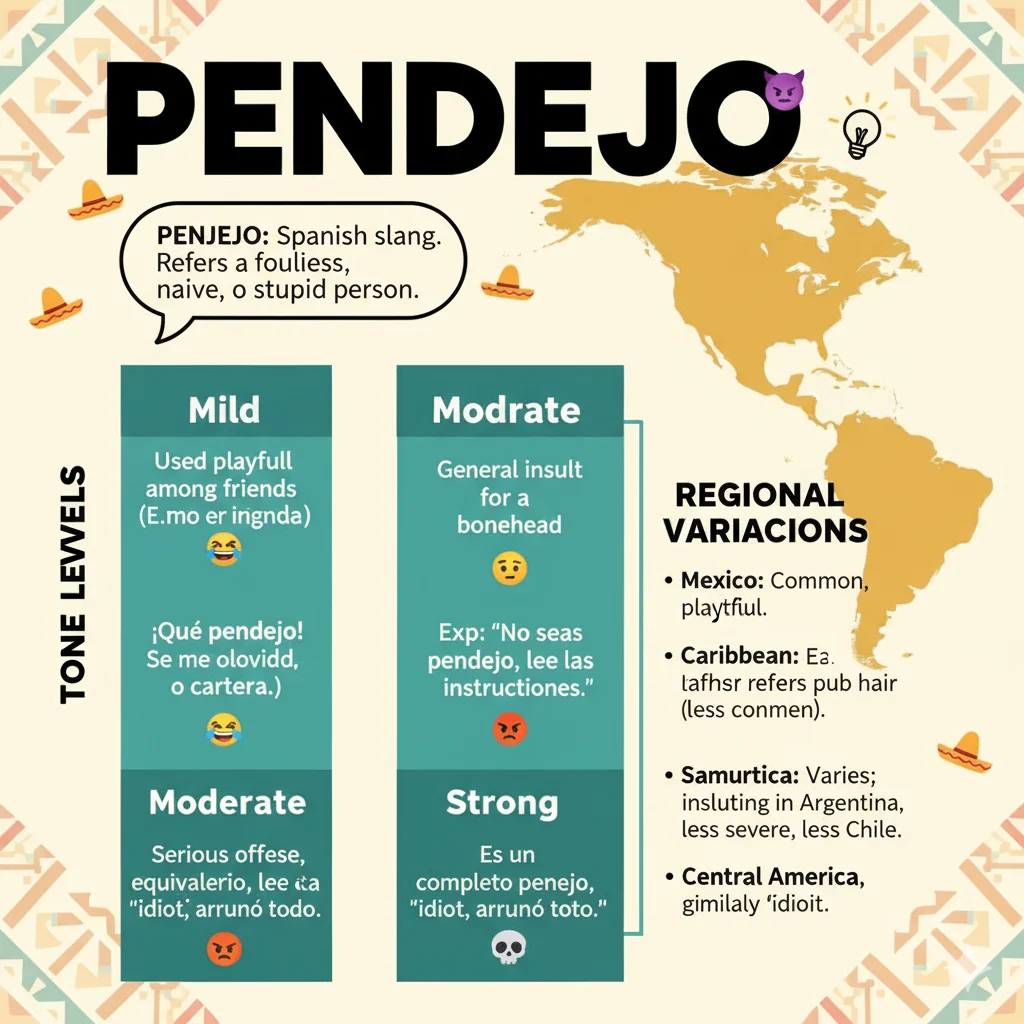

“Pendejo” is a Spanish slang insult that roughly translates to “idiot,” “fool,” “jerk,” or “dumbass.”
It is a strong, offensive word depending on tone, country, and context, and is commonly used across Mexico, Latin America, and among Spanish-speaking communities in the U.S.
While its core meaning revolves around calling someone stupid or foolish, its intensity, usage, and cultural interpretation vary widely.
This article breaks down everything you need to know: meaning, origin, pronunciation, examples, severity, cultural impact, variations, and when not to use it.
Understanding the Meaning of “Pendejo”
The word pendejo is used to describe a person who is acting stupid, foolish, annoying, or immature. Think of it like someone behaving cluelessly or making a dumb mistake—except with more bite.
A Direct Translation Doesn’t Capture the True Meaning
A literal translation doesn’t fully match the cultural weight of the word. In English, the closest equivalents include:
- Idiot
- Dumbass
- Moron
- Jerk
- Fool
- Jackass
However, “pendejo” often carries more emotional charge.
Is It Always an Insult?
Mostly, yes—but in some friend circles, it’s used jokingly, similar to calling someone:
- “Bro, you’re such an idiot (but in a friendly way).”
However, when used in a serious tone, it becomes a strong insult and can easily start an argument.

The Origin and History of the Word “Pendejo”
The word “pendejo” comes from the Latin word “pectiniculus,” which means “pubic hair.”
Yes—believe it or not, its original meaning referred to pubic hairs or young people at puberty.
How It Evolved Into an Insult
In old Spanish culture:
- A person who was a “pendejo” was someone who had grown pubic hair but was still immature.
- In other words, someone who looked grown but acted foolish.
Over time, the meaning shifted from a literal physical description to a metaphorical insult for stupidity or immaturity.

Cultural Differences in the Meaning of “Pendejo”
The intensity of the word varies across Spanish-speaking regions.
In some countries, it is very offensive, while in others, it is used casually or even humorously.
Mexico
- Very common
- Ranges from light insult to extremely offensive
- Often used among friends jokingly
- Example: “No seas pendejo” = “Don’t be dumb.”
Argentina
- Means “naive,” “immature,” or “a kid acting like a dummy”
- Not always harsh
- Example: “Es un pendejo todavía” = “He’s still young/immature.”
Chile
- Considered more offensive
- Usually used to describe someone foolish or annoying
Spain
- Less common but understood
- Considered impolite
United States (Hispanic communities)
- Used frequently among bilingual speakers
- Tone determines whether it’s joking or insulting

When and How “Pendejo” Is Used in Sentences
Understanding context is crucial. Here are the main ways the word appears.
As an Insult
Used to call someone stupid:
- “Ese tipo es un pendejo.”
(That guy is an idiot.)
To Criticize Bad Decisions
When someone makes a foolish choice:
- “Me estafaron porque fui un pendejo.”
(I got scammed because I was being stupid.)
To Complain About Someone
Used when someone annoys you:
- “Qué pendejo, siempre llega tarde.”
(What an idiot, he’s always late.)
Jokingly Among Friends
Light teasing:
- “Jajaja cállate pendejo.”
(Shut up, idiot — in a friendly tone.)
However, tone makes all the difference.
A playful “pendejo” can turn into a fight if said in the wrong context.

Variations & Related Slang Terms
Spanish dialects have multiple variations of “pendejo,” each with slightly different intensity or meaning.
Pendeja
Female version, meaning a stupid or foolish woman.
Pendejadas
Meaning “dumb things” or “nonsense.”
- Example: “No quiero escuchar pendejadas.”
Pendejito
A softer version meaning “little idiot” or “goof.”
Pendejeada
A foolish action or behavior.
Other Similar Spanish Slang Words
- Idiota = Idiot
- Estúpido = Stupid
- Tarado = Moron
- Mens0 = Silly/dumb (milder)
- Güey/Wey = Slang for “dude,” but sometimes used jokingly to mean “dummy”
Severity Level: How Offensive Is “Pendejo”?
The offensiveness depends on:
1. Tone of Voice
Playful tone = joking insult
Serious tone = real insult
2. Relationship
Among close friends → sometimes funny
To strangers → very offensive
At work → completely inappropriate
3. Country
Stronger in Chile and Mexico
Milder in Argentina
4. Setting
In public → rude
Online → common but still offensive
In family gatherings → disrespectful
Overall, it is considered medium to strong profanity.
Why Do People Use the Word “Pendejo”?
Despite being offensive, it remains extremely common because it expresses:
Frustration
Someone who cuts you off in traffic?
→ “Pendejo.”
Disbelief
When someone acts in an unbelievably foolish way.
→ “Qué pendejo.”
Anger
A quick emotional insult.
Joking Friendship
In some friend groups, insults show closeness—just like “idiot” or “dummy” in English.
Polite & Safer Alternatives to “Pendejo”
If you want to communicate frustration without being rude, use milder words:
Mens0 / Mensa
Meaning silly or foolish.
Torpe
Means clumsy.
Despistado
Means absent-minded or careless.
Ton to / Tonta
Mild way to say someone is acting dumb.
These prevent arguments and are socially acceptable.
Common Mistakes English Speakers Make
People learning Spanish often misuse the word. Here’s what to avoid:
Using It in Formal Situations
Never use it in work emails, business meetings, or professional texts.
Using It Without Understanding Tone
What you think is funny may be taken as a serious insult.
Using It With Spanish Speakers From Different Countries
Different cultures react differently.
Always consider the region before using slang.
Believing It Only Means “Idiot”
In some countries, it also relates to immaturity or naivety — not just stupidity.
How “Pendejo” Appears in Pop Culture
The word is extremely common in:
Movies
Used in Hispanic films to show frustration or comedic insults.
TV Shows
Characters use it to sound authentic to Latin culture.
Music
Artists like Bad Bunny, Calle 13, and Molotov have referenced the word.
Memes
Spanish-language memes often include the word in humorous contexts.
Its use in entertainment has made it globally recognized, even by non-Spanish speakers.
Should You Use the Word as a Non-Native Speaker?
If You’re a Beginner
Avoid using it.
It is easy to offend someone unintentionally.
If You Are Fluent
Use it only in appropriate contexts and only with people who understand your tone.
If You Are in a Spanish-Speaking Country
Be extra cautious—some regions take the word very seriously.
General Rule
If you’re not sure, don’t say it.
Frequently Asked Questions About “Pendejo”
Q1: Is “pendejo” a bad word?
Yes, it is considered offensive in most contexts.
Q2: Can friends use it jokingly?
Yes, but only if both sides understand it’s a playful insult.
Q3: Does it always mean stupid?
Mostly, but it can also mean naïve or immature depending on region.
Q4: Is it worse than “idiot”?
In many places, yes—it’s stronger and more insulting.
Q5: Is it okay to use online?
People use it, but it can still lead to conflict. Use carefully.
Conclusion
The word “pendejo” is a Spanish slang insult meaning idiot, fool, dumbass, or jerk, but its exact meaning varies depending on country, tone, and relationship. It’s a powerful word with cultural weight, originally referring to youths who looked mature but acted foolishly.
While it can sometimes be playful among friends, it is generally considered rude and potentially offensive—especially when used seriously or toward strangers. Understanding its history, variations, usage, and intensity helps you recognize when it’s appropriate and when it can cause offense.
Use it wisely, and always consider context.