
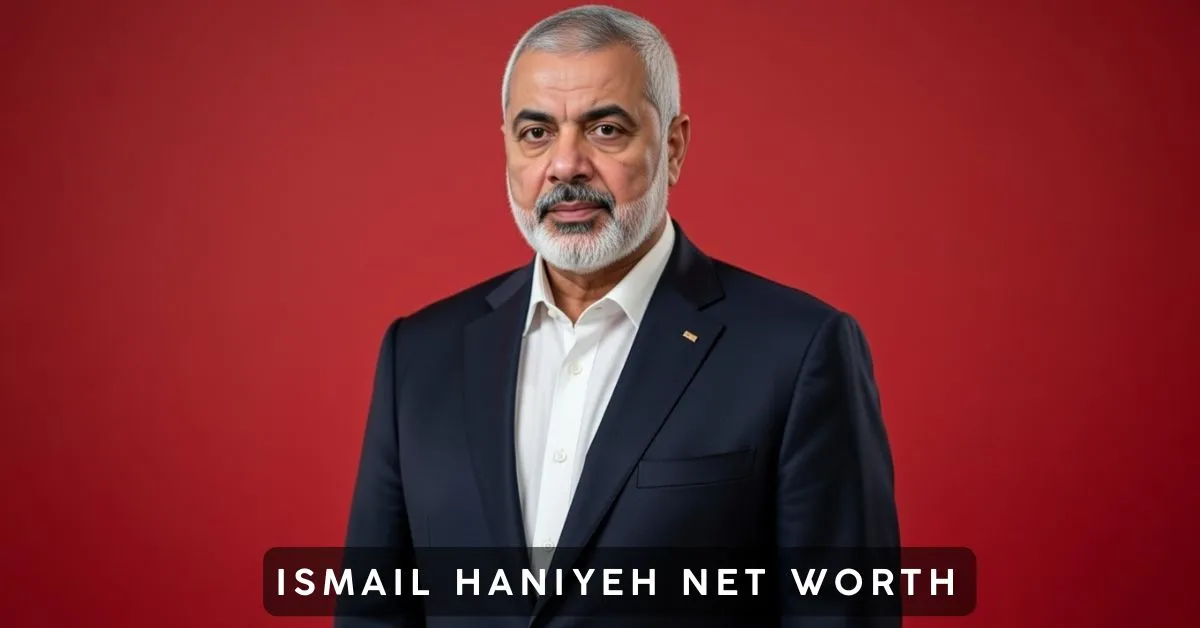
Ismail Haniyeh is a well-known Palestinian political figure and a senior leader of Hamas. Over the years, his name has frequently appeared in global headlines due to political developments in the Middle East.
However, beyond politics, many people are now asking a different question: what is Ismail Haniyeh’s net worth? This curiosity has grown as media reports and analysts have linked Hamas leaders to significant personal wealth while Gaza continues to face severe economic hardship.
In this article, we take a closer look at Ismail Haniyeh’s estimated net worth, income sources, and financial influence. Since there are no official disclosures, most figures come from reports, investigations, and media estimates.
Therefore, understanding the context behind these numbers is essential. Throughout this post, we’ll explore his background, political role, alleged assets, and the controversy surrounding his wealth, helping readers separate verified facts from speculation.
Who Is Ismail Haniyeh?
Ismail Haniyeh is a Palestinian political leader best known for his long-standing role within Hamas. He became widely recognized after serving as the Prime Minister of the Palestinian Authority in Gaza following Hamas’s victory in the 2006 legislative elections. Since then, he has remained one of the most influential figures in the organization’s political structure.
Over time, Haniyeh shifted from local governance in Gaza to a broader international political role. As the head of Hamas’s political bureau, he has represented the group in regional and international discussions, often operating from outside Gaza. This transition significantly increased his political reach and visibility. Consequently, it also fueled global interest in his personal finances and lifestyle.
Unlike elected officials in many countries, Haniyeh has never released public financial records. As a result, information about his wealth is largely based on investigative reporting and intelligence assessments. Supporters describe him as a resistance leader living modestly, while critics argue that his prolonged leadership and external connections may have enabled access to substantial financial resources. Understanding who Ismail Haniyeh is, therefore, provides essential context before examining claims about his net worth.
Early Life, Family, and Education
Ismail Haniyeh was born in the Gaza Strip and grew up in modest economic conditions. His early life was shaped by displacement, limited resources, and the broader Israeli-Palestinian conflict. He later studied Arabic literature at the Islamic University of Gaza, where he became involved in student politics.
During his university years, Haniyeh developed close ties with Hamas’s founders. These relationships played a major role in shaping his political path. Over time, his background as a local community figure helped him build grassroots support. This early foundation explains how he rose steadily within Hamas, eventually becoming one of its most prominent leaders.
Ismail Haniyeh Net Worth – Latest Estimates
Ismail Haniyeh’s net worth has become a widely discussed topic, mainly because of his long-standing leadership role and the financial controversies surrounding Hamas. Unlike business figures or public officials in transparent systems, Haniyeh has never disclosed his personal finances. As a result, all available net worth figures are estimates based on media reports, intelligence assessments, and investigative journalism.
Most widely cited sources estimate Ismail Haniyeh’s net worth between $3 billion and $4 billion. These figures often place him among the wealthiest political figures in the Middle East. However, it is important to note that no official documentation confirms these numbers. The estimates usually reflect alleged access to organizational funds rather than clearly defined personal ownership.
Interest in his wealth increased after reports suggested that senior Hamas leaders live abroad while Gaza faces extreme economic hardship. Consequently, many critics argue that political influence and long-term leadership may provide indirect financial benefits. On the other hand, supporters reject these claims and argue that such figures are politically motivated exaggerations.
Because of secrecy, sanctions, and informal financial networks, calculating an exact number is nearly impossible. Therefore, readers should view all net worth estimates with caution and understand them as approximations rather than verified facts.
Why Do Net Worth Estimates Vary So Much?
Net worth estimates for Ismail Haniyeh vary widely due to a lack of transparency and reliable financial data. Unlike corporate leaders, political figures linked to sanctioned groups do not use public banking systems. As a result, assets may be hidden, shared, or controlled indirectly.
Additionally, many reports rely on intelligence leaks or secondary sources, which can differ in accuracy and intent. Political bias also plays a role, as opposing sides may inflate or dismiss figures to support their narratives. This combination of secrecy, politics, and limited access explains why estimates differ so dramatically.
Main Sources of Ismail Haniyeh’s Wealth
The sources of Ismail Haniyeh’s wealth are not officially documented, which has led to widespread speculation and debate. Most reports do not claim that his income comes from a traditional salary. Instead, analysts focus on his long-term leadership position and influence within Hamas as the primary factor behind wealth allegations.
As the head of Hamas’s political bureau, Haniyeh has been linked to financial decision-making at the highest level. Critics argue that prolonged control over political and organizational structures can provide indirect access to funds. These may include discretionary budgets, influence over investments, or informal revenue streams connected to the organization’s operations.
Another commonly cited factor is external funding. Hamas has historically received financial support from foreign donors and allied states. Although these funds are intended for organizational use, some reports suggest that senior leaders may benefit personally through allowances, assets held in others’ names, or long-term financial arrangements abroad.
It is also claimed that parts of Hamas’s funding network operate outside standard banking systems. This makes tracking money extremely difficult. As a result, even investigators rely on estimates rather than concrete evidence. Supporters strongly deny these claims and state that Haniyeh lives within ideological and financial limits.
Ultimately, the absence of transparency fuels ongoing controversy and keeps questions about his wealth unresolved.
Role of Foreign Funding and Political Influence
Foreign funding plays a central role in discussions about Hamas leadership wealth. Over the years, Hamas has reportedly received support from regional allies and private donors. Because senior leaders manage diplomatic relations and negotiations, they often gain greater exposure to financial channels.
This influence does not automatically prove personal enrichment. However, critics argue that access itself creates opportunity. Since these systems operate in secrecy, verifying how funds are distributed remains extremely challenging.
Lifestyle, Assets, and Living Standards
Ismail Haniyeh’s lifestyle has drawn significant attention, especially when compared to the economic conditions in Gaza. While he is often portrayed as a leader connected to grassroots struggles, multiple media reports suggest that his living standards abroad are far more comfortable. This contrast has become a central point in discussions about his alleged net worth.
Reports indicate that Haniyeh has spent long periods outside Gaza, particularly after assuming an international political role. During these years, he has reportedly resided in countries such as Qatar and Turkey. Living abroad has allowed him greater mobility, security, and access to diplomatic circles. As a result, critics argue that such a lifestyle requires substantial financial resources.
In addition, various reports have linked Hamas leaders to high-value real estate and luxury accommodations. Although properties are rarely registered directly in their names, investigators suggest that assets may be held through associates or family members. Again, no official records confirm personal ownership.
Supporters counter these claims by stating that security needs and political responsibilities require controlled living arrangements funded by the organization, not personal wealth. Due to limited transparency, the true scale of Haniyeh’s assets remains unclear, leaving room for continued debate and speculation.
Family Lifestyle and Public Attention
Public interest has also focused on the lifestyle of Ismail Haniyeh’s family members. Media coverage has highlighted instances where his children were seen displaying expensive items, sparking widespread discussion online.
Critics argue that such displays contradict claims of modest living. Supporters, however, say these moments are misrepresented or exaggerated. Without verified financial disclosures, these reports continue to fuel controversy rather than provide definitive answers.
Political Power vs Personal Wealth
The debate around Ismail Haniyeh’s net worth cannot be separated from his political power. As a long-time leader within Hamas, Haniyeh has held influence over both political strategy and organizational direction. For critics, this level of authority raises questions about whether political leadership has translated into personal financial gain.
Many observers compare the alleged wealth of Hamas leaders with the harsh economic realities faced by ordinary people in Gaza. High unemployment, limited access to basic services, and ongoing conflict have intensified criticism. As a result, claims about Haniyeh’s wealth are often framed as part of a broader argument about inequality and accountability within political movements.
On the other hand, supporters argue that political power does not automatically equal personal wealth. They maintain that leaders operating under sanctions and security threats do not enjoy unrestricted access to money. According to this view, resources linked to leadership roles are organizational necessities rather than personal assets.
This contrast between perception and defense keeps the issue unresolved. Since financial systems connected to political groups are largely opaque, proving or disproving personal enrichment is extremely difficult. Therefore, the discussion around political power versus personal wealth remains shaped more by interpretation than confirmed evidence.
Public Perception and Internal Criticism
Public perception plays a major role in shaping opinions about Haniyeh’s wealth. Among critics, especially those affected by Gaza’s economic struggles, allegations of elite privilege have fueled frustration.
Meanwhile, internal supporters emphasize loyalty, resistance, and leadership sacrifice. This divide shows how financial claims often reflect political beliefs rather than verified facts, keeping the debate highly polarized.
Sanctions, Legal Pressure, and Financial Restrictions
International sanctions play a major role in shaping discussions about Ismail Haniyeh’s net worth. Over the years, several countries have imposed sanctions on Hamas leaders, including financial restrictions, travel bans, and asset freezes. These measures are designed to limit access to global financial systems and reduce the organization’s ability to raise or move funds.
Because of these sanctions, Haniyeh cannot legally use international banks or hold openly registered assets in many countries. As a result, any alleged wealth would likely exist outside formal systems. This reality makes financial tracking extremely complex and fuels speculation about alternative networks used to manage funds.
Sanctions also affect how wealth is perceived. Critics argue that despite restrictions, senior leaders still maintain access to resources through informal channels. Supporters counter that sanctions significantly limit personal freedom and financial control, making claims of vast personal wealth unrealistic.
Additionally, legal pressure forces political figures like Haniyeh to operate with heightened secrecy. This secrecy, while necessary for security, also prevents transparency. Consequently, the lack of clear evidence allows both exaggerated claims and outright denials to circulate widely, with little possibility of independent verification.
Impact of Sanctions on Net Worth Estimates
Sanctions greatly influence how net worth figures are calculated. Since assets cannot be openly held or disclosed, analysts rely on indirect indicators such as lifestyle, travel patterns, and reported associations.
However, these indicators do not confirm ownership. Therefore, sanctions both obscure financial reality and contribute to inflated or conflicting estimates, making accuracy difficult to achieve.
Media Reports and Global Reactions
Media coverage has played a key role in shaping perceptions of Ismail Haniyeh’s wealth. International news outlets, regional media, and investigative reports often highlight alleged personal wealth while contrasting it with the economic hardships faced by ordinary Palestinians in Gaza. These reports have contributed to a global debate on the legitimacy and scale of his net worth.
Western media frequently emphasize Haniyeh’s political influence and alleged access to substantial resources. Headlines often focus on claims of luxurious lifestyles, offshore holdings, and foreign funding networks. These portrayals can exaggerate certain aspects, as many sources rely on unofficial intelligence, leaked documents, or secondary reporting rather than verified records.
Middle Eastern media sometimes offer a different narrative, presenting Haniyeh as a resistance leader and emphasizing the challenges of leadership under sanctions and conflict. Supporters argue that allegations of personal enrichment are politically motivated, meant to undermine Hamas’s credibility and Haniyeh’s authority.
The combination of contrasting perspectives makes it difficult for readers to discern fact from speculation. As a result, net worth estimates and lifestyle reports are often debated vigorously online and in political discourse. Understanding media biases and motivations is essential for anyone trying to evaluate Haniyeh’s true financial situation.
International Reactions and Controversy
Global reactions vary widely. Critics highlight alleged wealth to question legitimacy, while allies and supporters dismiss claims as propaganda. These differing narratives continue to fuel debates about transparency, accountability, and political influence, leaving Haniyeh’s actual finances largely unverified.
Comparison With Other Political Leaders
Comparing Ismail Haniyeh’s alleged net worth with other political leaders provides useful context. While his estimated wealth is often reported between $3 billion and $4 billion, it is important to remember that most figures are speculative. Comparisons can help readers understand how political influence may intersect with financial power, particularly in regions with complex governance systems.
Within Hamas, Haniyeh is often cited as one of the wealthiest figures. Reports suggest that senior leaders may have access to resources and organizational funds, though direct personal ownership remains unclear. This contrasts sharply with the majority of Gazans, who face severe economic challenges and limited access to basic services.
Globally, political leaders’ wealth varies widely. Some democratically elected leaders publicly disclose their finances, while others in conflict regions operate without transparency. Comparing Haniyeh to these leaders highlights the difficulties of accurately assessing wealth in politically sensitive environments. Analysts must consider secrecy, sanctions, and informal financial networks, which are not factors for most public officials elsewhere.
While comparisons can illustrate patterns, they cannot definitively confirm Haniyeh’s net worth. It remains largely an estimate shaped by media reports, intelligence assessments, and political narratives, emphasizing the need for cautious interpretation.
Hamas Leadership Net Worth Comparison
Within Hamas, Haniyeh is often portrayed as wealthier than many peers due to his senior political position. However, precise figures are unavailable. Analysts rely on indirect measures such as influence, lifestyle, and reported funding access, which cannot conclusively verify personal wealth.
How Accurate Are Net Worth Estimates of Political Leaders?
Estimating the net worth of political leaders, particularly in conflict zones, is extremely challenging. In the case of Ismail Haniyeh, secrecy, lack of transparency, and sanctions make it difficult to verify financial claims. Most figures reported by media outlets or analysts are estimates based on indirect indicators, such as lifestyle, travel patterns, and alleged access to organizational funds.
Unlike corporate executives or elected officials in transparent systems, political figures like Haniyeh rarely disclose their finances publicly. Many of the assets linked to him, if any, are likely held in informal networks, offshore accounts, or through associates and family members. This opacity creates a wide range of speculation, which is why net worth figures often vary from one report to another.
Another factor affecting accuracy is political bias. Media, intelligence agencies, and political opponents may inflate or downplay figures to support a narrative. Additionally, external sanctions prevent leaders from openly holding or declaring assets, further complicating verification.
Because of these challenges, any estimate of Haniyeh’s net worth should be viewed as a rough approximation rather than an exact figure. Understanding these limitations is essential for readers seeking a balanced perspective on the subject.
Challenges in Estimating Political Wealth
Political wealth is often hidden or indirect. Lack of disclosure, informal financial systems, and political biases make it nearly impossible to calculate an exact net worth. Analysts rely on secondary data, which may not fully reflect reality.
FAQs
1. What is Ismail Haniyeh’s estimated net worth?
Estimates range from $3 billion to $4 billion, based on media reports and indirect assessments of his financial influence.
2. How does Ismail Haniyeh make his money?
Most reports link his wealth to Hamas leadership, alleged foreign donations, and access to organizational funds.
3. Is Ismail Haniyeh a billionaire?
According to many media estimates, he is considered a billionaire, though no official financial disclosures exist.
4. Where does Ismail Haniyeh currently live?
Haniyeh primarily resides outside Gaza, in countries like Qatar and Turkey, due to political and security reasons.
5. Are reports about his wealth confirmed?
No official records confirm his net worth. Figures are based on speculation, media reports, and intelligence estimates.
Conclusion
Ismail Haniyeh remains one of the most influential and controversial figures in Palestinian politics. As the head of Hamas’s political bureau, his role extends beyond local governance to international diplomacy, making him a key player in regional affairs. Alongside his political influence, discussions about his personal wealth have attracted global attention.
Estimates of Haniyeh’s net worth vary widely, generally ranging between $3 billion and $4 billion. However, these figures are largely based on media reports, intelligence assessments, and indirect indicators such as lifestyle, assets, and access to organizational funds. No official financial records exist, and international sanctions further complicate the picture. Supporters argue that claims of vast wealth are politically motivated, while critics highlight the contrast between alleged wealth and the economic hardships faced by ordinary Palestinians in Gaza.
Ultimately, the true extent of Ismail Haniyeh’s personal wealth remains uncertain. What is clear, however, is that his influence, leadership, and the controversies surrounding him continue to make him a figure of global interest. Understanding both his political role and the context of wealth allegations provides a more balanced perspective for readers.

Hi, I’m Shaun Tait, the voice behind Rizztak.com. I love diving into all things fun, quirky, and shareable—whether it’s clever life hacks, hilarious memes, or the latest trends online. My goal here is simple: make you laugh, think, and maybe even discover something new you didn’t know you needed.